

Fire cider vs ginger shot comes down to the base. Fire cider is apple cider vinegar infused with roots and peppers like horseradish, garlic, ginger and cayenne, then sweetened with honey. A ginger shot is fresh ginger pressed into juice, often with turmeric, lemon and cayenne. Pick fire cider if you like a sharp, vinegar shot around meals. Pick a ginger shot if you want ginger front and center every morning.
We make both, so we get this question a lot. Queen Bee is our company, and both shots in this post are ours. The goal here is to explain how the two drinks differ, so you can pick the one that fits your routine. We compare bases, ingredients, heat and storage. We do not compare health outcomes, because nobody has tested these drinks head to head.
I formulate every Queen Bee shot myself, and both of these start the same way: raw honey and royal jelly from small-scale beekeepers, a 2 oz glass bottle, made the day your order ships. What changes is the base. Ginger is our immunity shot. Fire Cider is our digestion shot. Most people know right away which one they want. Raina Singhvi Jain, Founder
What is the difference between fire cider and a ginger shot?
Fire cider is a steeped vinegar tonic. The original recipe, popularized by herbalist Rosemary Gladstar in the late 1970s, soaks garlic, ginger, horseradish, onion and cayenne in apple cider vinegar for up to 4 weeks, then adds honey (Healthline, as of Nov 2026). A ginger shot is pressed juice, with no vinegar base.
So the two drinks are built in opposite ways. Fire cider pulls flavor out of whole roots slowly, using vinegar as the solvent. A ginger shot presses the root directly, so you drink the juice itself.
Ginger shows up in both. In fire cider it shares the stage with horseradish, garlic and onion. In a ginger shot it is the main ingredient. If you want to know more about the tonic on its own, start with what fire cider is and where it comes from. To make a batch at home, follow our fire cider recipe.
Fire cider vs ginger shot, side by side
The biggest practical difference is acidity. Fire cider is mostly apple cider vinegar, and acidic drinks have been shown to damage tooth enamel (Healthline). A ginger shot gets its bite from the root and from cayenne instead.
Here is how a traditional homemade fire cider compares with our two shots. Ingredients for the Queen Bee shots come from our own labels. The homemade column follows the original recipe.
| Homemade fire cider | Queen Bee Fire Cider | Queen Bee Ginger | |
|---|---|---|---|
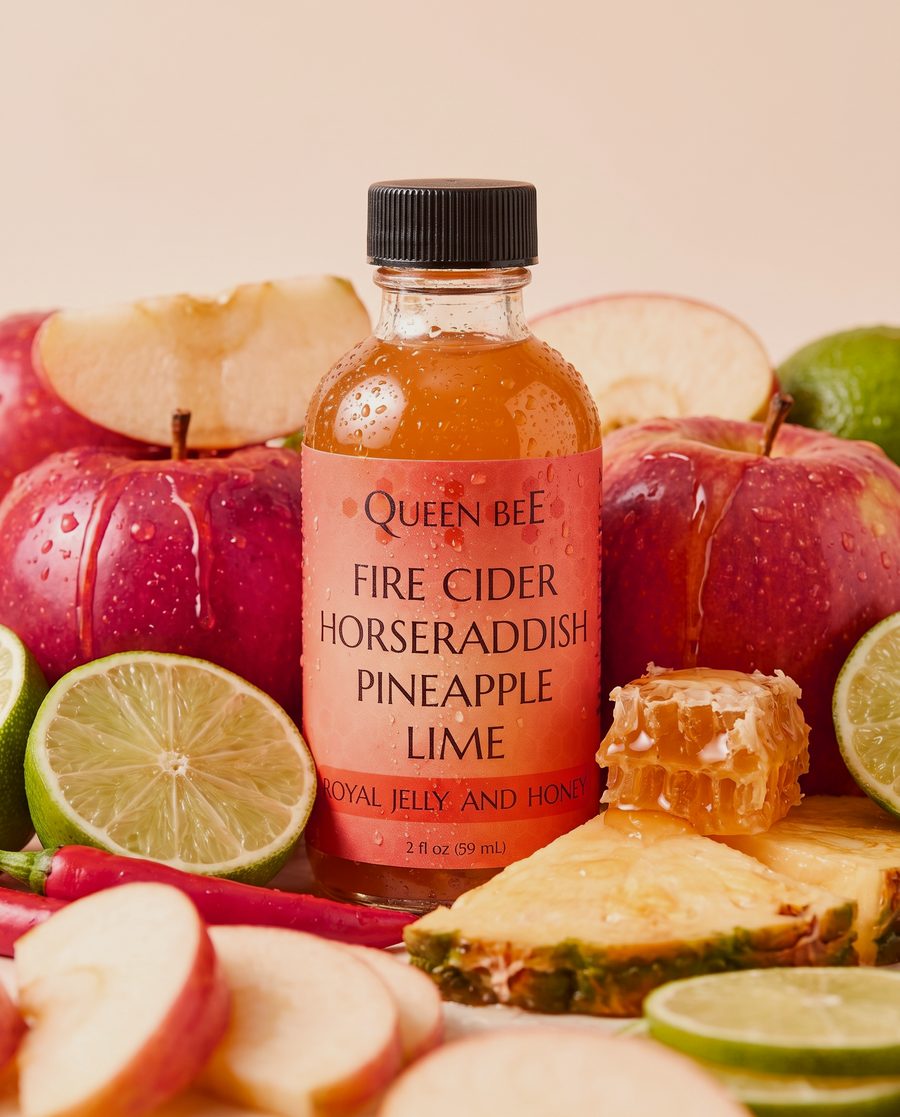
| Base | Apple cider vinegar | Apple cider vinegar and pineapple | Fresh pressed ginger and turmeric |
| Other ingredients | Garlic, ginger, horseradish, onion, cayenne | Ginger, horseradish, lime, turmeric, cayenne | Cayenne, lemon |
| Sweetener | Honey, added after straining | Honey and royal jelly | Buckwheat honey and royal jelly |
| How it is made | Steeped up to 4 weeks | Cold-pressed, never heat-treated | Cold-pressed, never heat-treated |
| Serving | Often 1.5 oz a day, or 2 to 3 tablespoons | One 2 oz glass bottle | One 2 oz glass bottle |
| Storage | Depends on your batch | Shelf stable until opened; refrigerate after opening and finish within a week | Shelf stable until opened; refrigerate after opening and finish within a week |
| Built for | A folk tonic tradition | Supports healthy digestion | Supports your immune system, every day |
Homemade fire cider has real strengths. It costs little if you already keep the roots around. You control the heat, the garlic and the sweetness. Many people also enjoy the ritual of making a jar in the fall. The trade-off is time: a batch takes about a month before it is ready.
Why does each one burn?
They burn for different reasons. In fire cider, the vinegar is acidic, and many people report a burning feeling after drinking it (Healthline). In a ginger shot, the heat comes from the ginger itself and from cayenne. Ginger can cause mouth and throat irritation in some people (NIH NCCIH).
That difference matters if you have a sensitive stomach. Vinegar is sharp on the way down. Ginger and cayenne build warmth after you swallow. Neither one is mild, and that is the point of both.
A few habits make either one easier. Drink a glass of water after. Take it with food if your stomach is sensitive. With any vinegar shot, ours included, rinse your mouth with water and wait at least 30 minutes before brushing your teeth (Healthline). For more on timing, see whether to take a shot before or after eating.
Which one should you drink?
Choose by routine. Ginger has been used for thousands of years in Ayurveda to support digestion, and it is in both drinks. If you want a daily ginger ritual, a ginger shot gives you the most of it. If you like vinegar and want a shot around meals, fire cider fits better.
A ginger shot suits you if:
- You want ginger as the main ingredient, not one of five
- You prefer no vinegar, or vinegar bothers your teeth or throat
- You want a morning shot that helps you feel warm and ready
Fire cider suits you if:
- You already like apple cider vinegar
- You want something to drink with or after a meal
- You enjoy horseradish heat as well as ginger
The Queen Bee Ginger shot is built to support your immune system, every single day, with 20,000 mg of fresh ginger and turmeric in every shot. The Queen Bee Fire Cider shot supports gut comfort after meals. If you are weighing vinegar against ginger for digestion specifically, our post on apple cider vinegar vs ginger shots for digestion goes deeper.
Can you drink fire cider and a ginger shot on the same day?
Many people do: a ginger shot in the morning and fire cider with a meal. Watch the total. Ginger can cause abdominal discomfort, heartburn and diarrhea when taken by mouth (NIH NCCIH), and both drinks contain it.
If you take medicine, talk with your health care provider before adding herbal drinks, since some herbs and medicines interact. Vinegar can also affect potassium and blood sugar for people on insulin, digoxin or diuretics (Healthline). For a sense of how much is reasonable, read how many wellness shots you can take a day.
Two more notes. Both of our shots contain royal jelly, and people allergic to bee products should avoid royal jelly (Memorial Sloan Kettering). And because all of these drinks contain honey, never give them to a child younger than 1 year old (CDC).
FAQ
Should you take fire cider daily?
Many people do. Common amounts are one 1.5 oz shot a day or 2 to 3 tablespoons spread through the day, often diluted with water (Healthline). Because it is acidic, rinse your mouth after and skip it if it bothers your stomach.
Who should not take fire cider?
People with acid reflux, indigestion or gastroparesis may want to avoid it or dilute it. Anyone who is pregnant, breastfeeding, taking medication or managing a digestive or metabolic condition should ask their provider first (Healthline). Skip any version with royal jelly if you are allergic to bee products.
What time of day should you take fire cider?
There is no proven best hour. Most people take it in the morning or with a meal. Taking it with food is gentler if vinegar upsets your stomach, and a glass of water after helps protect your teeth.
What are the downsides of ginger shots?
Ginger can cause abdominal discomfort, heartburn, diarrhea and mouth or throat irritation (NIH NCCIH). Shots with turmeric can also cause stomach upset or acid reflux in some people (NIH NCCIH). See the side effects of ginger for who should be careful.
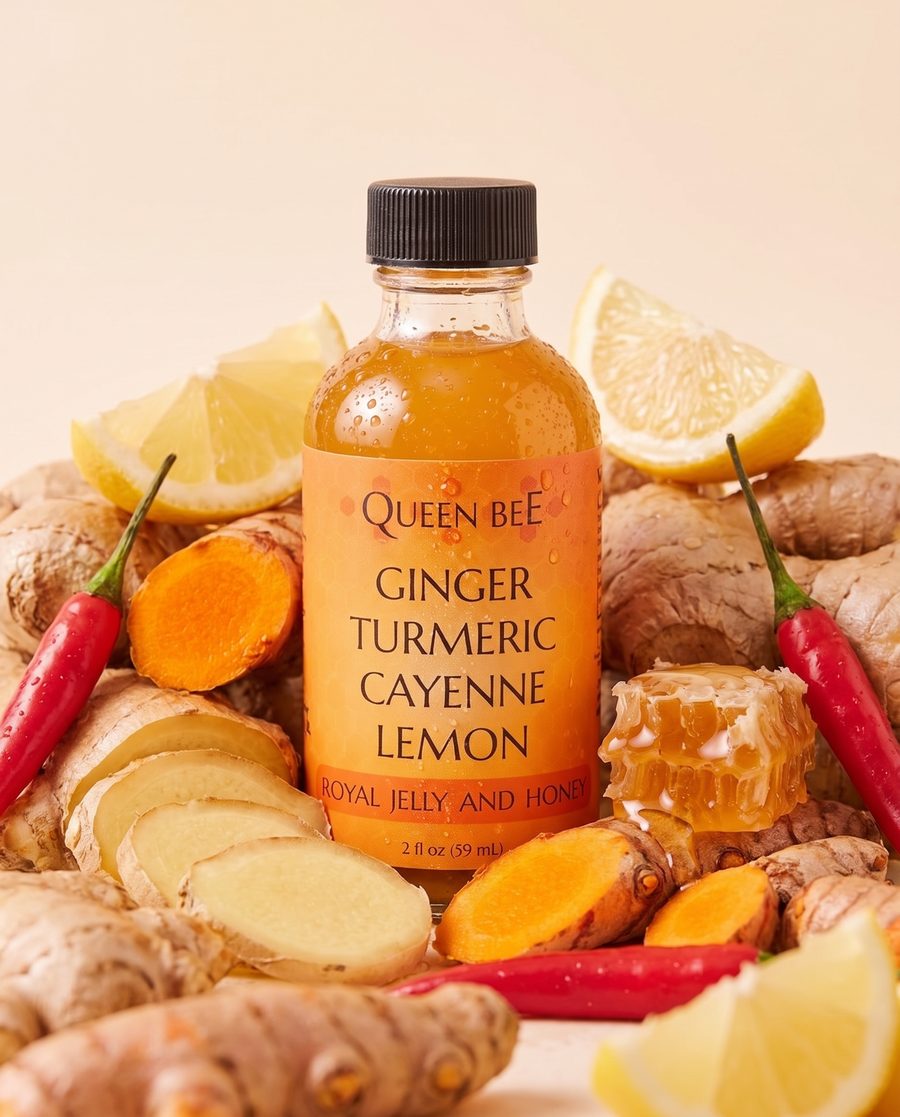
Want ginger front and center? The Queen Bee Ginger shot has 20,000 mg of fresh ginger and turmeric in every 2 oz glass bottle, finished with buckwheat honey and royal jelly. Prefer vinegar? Try the Fire Cider shot.
See the Ginger shot →Key takeaways
- Fire cider is apple cider vinegar steeped with roots and peppers; a ginger shot is pressed ginger juice
- Fire cider is more acidic, so rinse your mouth after and protect your teeth
- Ginger is in both, but a ginger shot makes it the main ingredient
- Pick a ginger shot for a daily morning ritual and fire cider for a shot around meals
- Both Queen Bee shots are 2 oz, in glass, and shelf stable until opened
Sources: Healthline, Fire Cider · NIH NCCIH, Ginger · Healthline, Apple Cider Vinegar Side Effects · Memorial Sloan Kettering, Royal Jelly